
In This Article:
Many moving-average guides recommend a standard combination of short and long periods. I use moving averages more as references than as automatic signals: the faster lines help me manage strong moves, while the slower ones help me judge the broader trend. Here’s how I use each of the five simple moving averages on my charts, and where I think each one can mislead you.
How I Use Moving Averages for Swing Trading
I’m a swing trader who keeps my charts fairly simple. I mainly use price action, volume, and moving averages. Adding more indicators can give you more things to interpret, and I prefer to keep the focus on the chart and the trade setup.
I could probably trade without moving averages. I mostly use them as guides to a stock’s trend and, in some cases, to help manage an open position. On my daily charts, I use the faster 10- and 20-day simple moving averages (SMAs) for shorter-term reference. I use the 50-, 100-, and 200-day SMAs to help judge the broader trend.
The periods refer to daily charts in this article. If you apply a 10-period moving average to an hourly chart, it uses the last 10 hourly bars, not 10 trading days.
| Moving average | How I use it |
|---|---|
| 10-day SMA | As a faster reference for managing strong momentum positions |
| 20-day SMA | For some trailing exits and as a guide when reviewing pullbacks in strong stocks |
| 50-day SMA | As an intermediate trend reference and scan criterion |
| 100-day SMA | As an additional guide to the medium-term trend; I use it the least |
| 200-day SMA | As a long-term trend reference and scan criterion |
Simple vs. Exponential Moving Averages
A simple moving average gives equal weight to the closing prices in its period. An exponential moving average (EMA) gives more weight to recent prices, so it responds more quickly when price changes.
That faster response can also mean more short-term movement and more potential whipsaws. A slower average may react later. Which one makes sense depends on your strategy, chart timeframe, and how you plan to use it.
I found that SMAs work best for me, and they’re what I studied my charts with, so I stick with them. In some situations, an EMA may suit another trader better. I don’t think the SMA-versus-EMA choice matters as much as using the same method consistently and understanding what it tells you.
The Best Moving Averages for Swing Trading
There isn’t one moving average that is best for every swing trader. The right period depends on what you’re trying to see and how long you expect to hold a trade. These are the five SMAs I use, with the 10- and 20-day averages playing the biggest role in my position management.
1. 10-Day Simple Moving Average
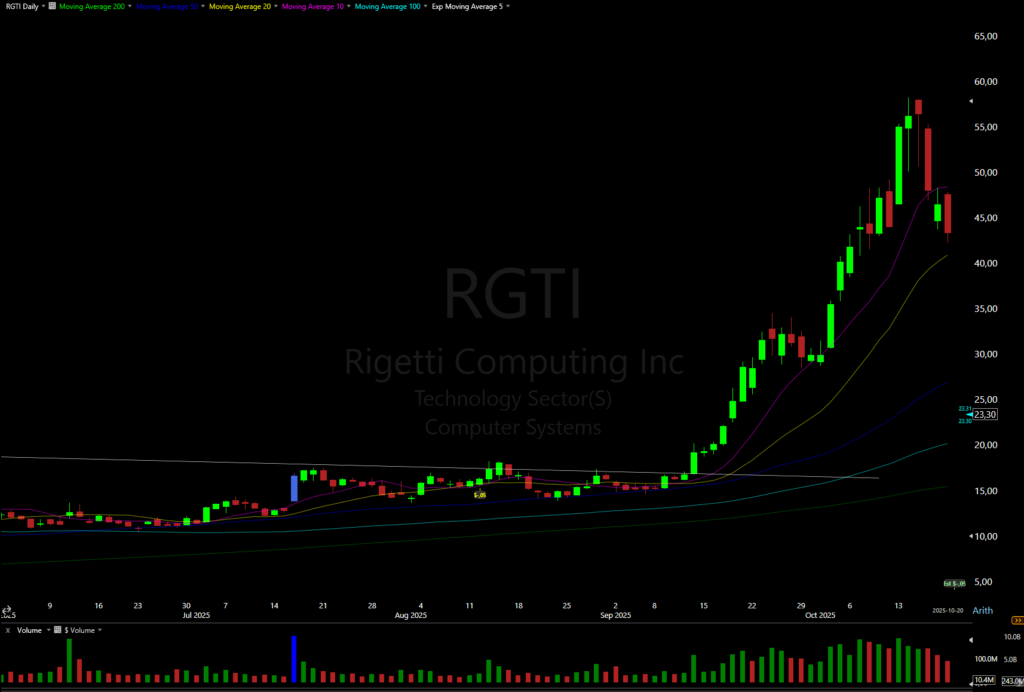
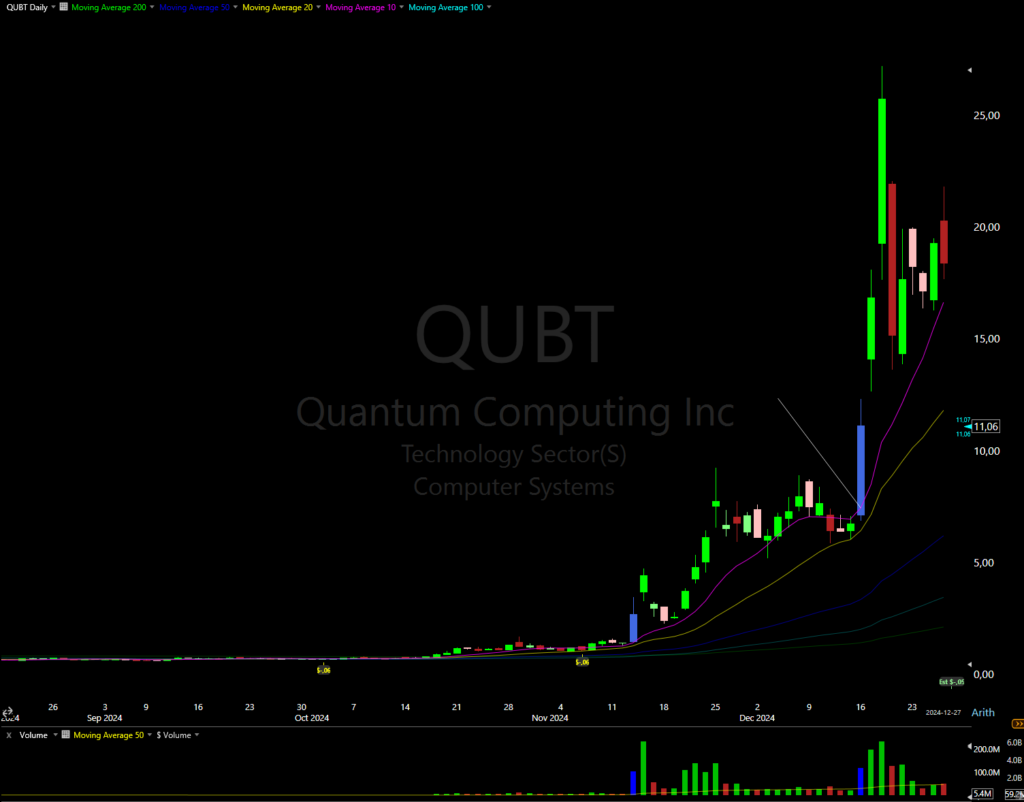
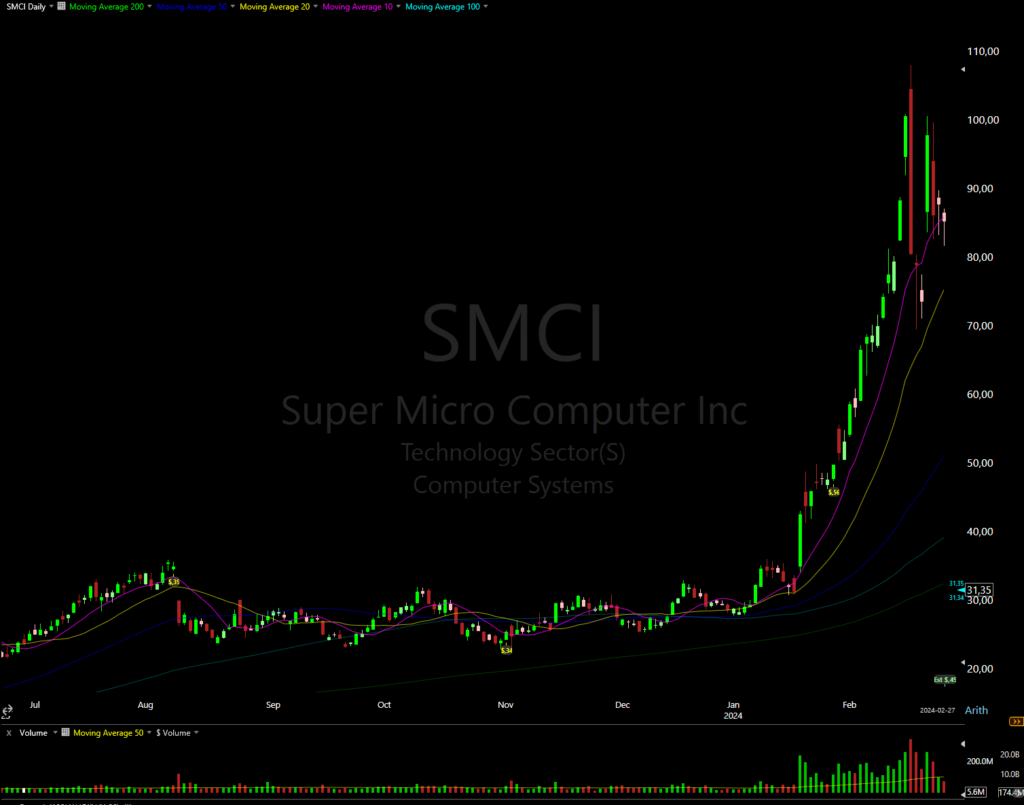
The 10-day SMA is the fastest one I use. In a strong momentum stock, I may use a red daily close below it as a reason to reduce or exit a position, depending on the trade and my plan. It can help me stay with a fast move while price holds up, but I don’t treat every touch or brief move below it as an automatic sell signal.
A faster average can help protect more open profit when a stock reverses, but it can also take you out during a normal pullback. A slower average may keep you in longer, while giving back more of an open gain if the stock turns sharply. That’s the tradeoff I consider when managing a position.
2. 20-Day Simple Moving Average
The 20-day SMA is another average I sometimes use to manage a position, especially in a stock I think may continue trending for longer. I also watch it when reviewing pullbacks in momentum stocks. A rising 20-day average can give useful context, but price touching it is not an entry signal by itself. I still want to see a setup and a price-action trigger that fit my plan.
You may hear traders describe a moving average as rising at a “45-degree angle.” I look for a clear upward slope, but the angle on a chart depends on its scaling, so I don’t treat a literal 45-degree angle as a measurable rule.
You can see how I use pullbacks and other patterns in my guide to swing trading setups I trade.
3. 50-Day Simple Moving Average
I almost never use the 50-day SMA as a trailing exit. For the faster-moving stocks I trade, I find that a close below it can give back too much of an open gain. Some traders use it to manage slower stocks or positions they intend to hold longer, which is a different approach.
I find the 50-day SMA more useful as a trend reference and when reviewing a setup near the average. For example, I may pay attention when a stock undercuts a rising 50-day SMA and then reclaims it, but I still want to see how price behaves around that level. I also use price above the 50-day average as one of my scan criteria. It helps narrow the list; it doesn’t prove that a stock is a good trade.
4. 100-Day Simple Moving Average
The 100-day SMA is the one I use least. I find the 200-day average more useful as a broad trend reference, but the 100-day can add context when I’m looking at the position of the moving averages relative to one another.
For example, in a well-ordered uptrend, the shorter averages may be above the longer ones, with price holding above the group. That pattern can help me describe the trend, but moving averages are calculated from past prices and can lag a sharp change. I still look at the stock’s price action.
5. 200-Day Simple Moving Average
The 200-day SMA is a widely watched long-term reference. I mainly use it to judge the broader trend and as one of my scan criteria. I rarely take long setups in stocks trading below it because my approach focuses on stocks showing strength.
Price below the 200-day SMA doesn’t automatically mean a stock is a bad trade. It does mean the stock is below that long-term reference, and I would want to understand the trend and the setup before considering a long position. Traders who focus on short setups or shorter-term reversals may use it differently.
Other Types of Moving Averages
There are other types of moving averages, including weighted, front-weighted, and Hull moving averages. I don’t use them much in my trading, so I can’t speak to them from the same personal experience. They may suit other traders, but I prefer to focus on the SMAs I know and have studied.
Frequently Asked Questions
Which moving average is best for swing trading?
There isn’t one best moving average for every swing trader. I use the 10- and 20-day SMAs to help manage positions and the 50-, 100-, and 200-day SMAs to view the broader trend. The right choice depends on your setup, holding period, and trading plan.
Should I use an SMA or EMA for swing trading?
An EMA responds more quickly to recent prices, while an SMA gives equal weight to the prices in its period. I prefer SMAs because that is what I use and have studied. Try one method on your charts and keep it consistent long enough to understand how it behaves in different market conditions.
Can I use moving averages as buy and sell signals?
You can build rules around moving averages, but I don’t use them in isolation. A moving average is based on past prices and can lag or produce false signals, particularly when a stock is moving sideways. I review the full setup, price action, and risk before making a trade decision.
Final Thoughts
Moving averages are debated in the trading community. I understand why some traders consider them unnecessary, especially if they rely mainly on price action. I find them useful as references for the trend and for managing some positions, but I don’t expect them to predict what a stock will do next.
If you want to see more of the setups I trade, you can find me on X, where I post charts and trading thoughts.